Gutter Guards: Do You Still Need Gutter Cleaning?
Gutter guards don’t always mean zero maintenance. Learn when you still need gutter cleaning and how to tell if your downspouts are clogged or backing up.
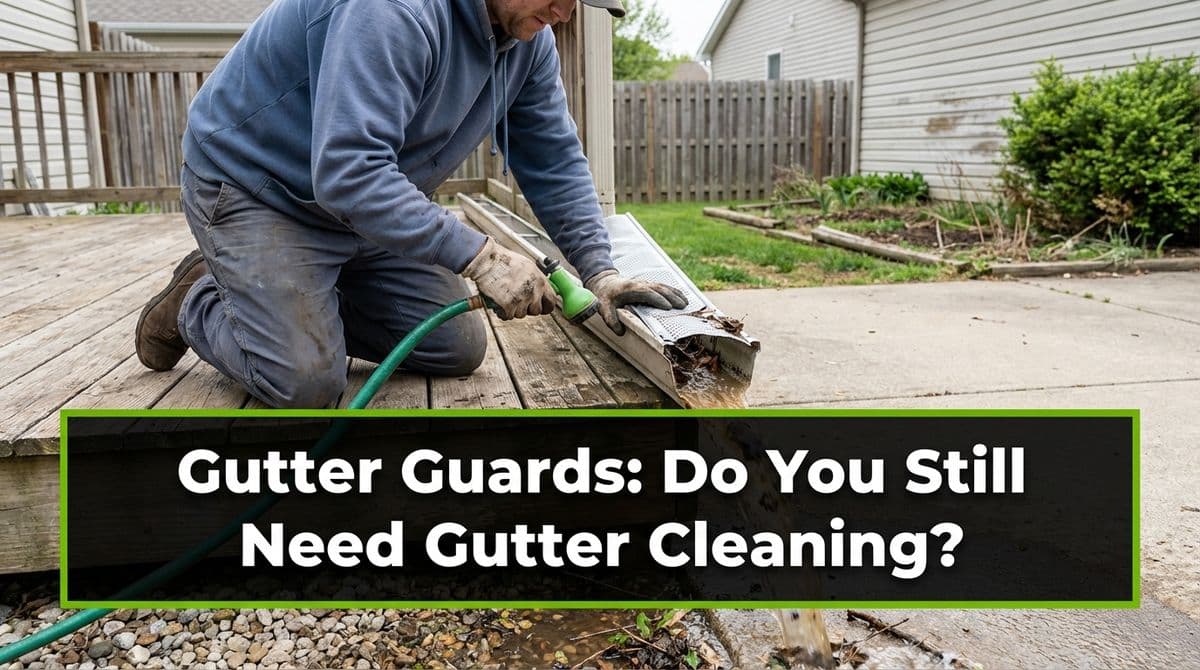
Do I Still Need Gutter Cleaning If I Have Gutter Guards?
We recently got a call from a customer — let’s call her Lisa — who had just moved into a two-story home. She told us, “I’m pretty sure I have gutter guards, but the little things at the bottom of the house on the corners are full of leaves. Do I still need my gutters cleaned?”
What Lisa was talking about were her downspouts — and her question is one we hear all the time: if you have gutter guards, do you really still need to think about gutter cleaning and clogs?
Let’s walk through what we explained to her, because if you’ve got guards on your gutters, you might be wondering the exact same thing.
What Gutter Guards Actually Do (and Don’t Do)
When Lisa called, her first thought was that the gutter guards meant she was off the hook for regular cleanings. And to be fair, that’s a common assumption.
Here’s the deal: quality gutter guards are designed to reduce debris getting into your gutters, not necessarily to eliminate maintenance forever.
How gutter guards help
Most guard systems (screens, micro-mesh, solid covers, etc.) are there to:
- Block larger debris like leaves, twigs, and seed pods
- Help water flow into the gutters instead of over the edge
- Cut down how often you need a full gutter cleaning
If your guards are installed correctly and in good shape, you usually don’t have to worry about the gutters themselves filling up with leaves.
Where gutter guards fall short
Here’s the part many homeowners don’t realize: gutter guards don’t protect the entire drainage system. They typically sit on top of the gutters — not down in the:
- Downspouts (the vertical pipes on the corners of the house)
- Downspout outlets (where the gutter drains into the downspout)
- Elbows and underground drains (if your system ties into buried piping)
Fine debris, shingle grit, and small leaves can still get through and eventually settle in those tighter spots. That’s exactly what we suspected was happening at Lisa’s new home.
Do You Still Need Gutter Cleaning If You Have Guards?
When Lisa asked if she needed a gutter cleaning, our honest answer was: “It depends what’s actually clogged.”
If you have solid, well-installed gutter guards and they’re intact and not overflowing, you typically don’t need a full “scoop and clean” inside the gutters every year like an open system would.
However, you may still need:
- Periodic inspections to make sure guards are seated correctly and not damaged
- Spot cleaning where debris piles up on top of the guards, especially under trees
- Downspout and outlet clearing if water isn’t draining properly
In other words: gutter guards lower the maintenance, but they rarely make it zero.
How to Tell If Your Downspouts Are Clogged
Lisa mentioned “things at the bottom on the four corners of the house” packed with leaves — a classic sign of a downspout problem. You don’t need special training to spot most of the warning signs. Here’s what we tell homeowners to look for.
Visual and sound clues during a rain
Next time it’s raining, step outside (safely) and check a few things:
- Water spilling over the gutter edge instead of flowing to the downspouts
- Little or no water coming out of the bottom of the downspout while it’s raining
- Gushing at one section and nothing at others
- Gurgling or “glug-glug” sounds from the downspout as water struggles past a clog
Dry-weather clues
Even if it’s not raining, you can often tell something’s wrong if you notice:
- Piles of leaves or mud packed around the downspout outlet
- Peeling paint, mildew, or staining on the siding near a downspout
- Soft, washed-out soil or trenches near the foundation below the gutters
- Water marks on fascia boards or soffits just under the roofline
If you see a few of these together, there’s a good chance you’ve got a partial or full blockage.
Can You Clear a Clogged Downspout Yourself?
On our call, Lisa asked if this was something she could tackle on her own. We told her what we’ll tell you: sometimes yes — but be smart about safety and when to call for help.
DIY-friendly situations
If your home is a single story or you can safely reach the bottom of the downspout, you can often try:
- Hand clearing any packed leaves or debris at the bottom outlet
- Garden hose flush: insert the hose at the bottom, turn on the water, and see if it backs up or flows freely
- Gutter scoop or small plumbers snake (used gently) to dislodge light clogs
For a two-story home like Lisa’s, we cautioned her that ladder work gets risky fast if you’re not used to it or don’t have the right equipment.
When to call a pro
Consider professional help if:
- Your home is two stories or more and you’re not comfortable on high ladders
- Your downspouts tie into underground drains that may be packed with debris
- You’ve tried flushing and the clog still won’t budge
- You see signs of water damage around your roofline or foundation
Different contractors specialize in different parts of the system — for example, we focus more on the roof and gutter side, while some companies are set up with specialized tools to clear downspouts and underground lines.
Quick Checklist: What You Should Do If You Have Gutter Guards
Before we got off the phone, we suggested a simple plan for Lisa to follow once she got home and took a closer look. Here’s the same checklist you can use:
- Confirm you actually have gutter guards. Some homes only have them on certain runs, not the whole house.
- Walk the perimeter. Look at each downspout bottom for leaf buildup, soil washout, or stains on the siding.
- Check during the next rain. Make sure water is coming out of each downspout and not spilling over the gutters.
- Clear what you can safely reach. Remove visible clogs at the bottom outlets.
- Schedule an inspection if you spot overflow, staining, or anything you’re unsure about.
Not Sure What You’re Looking At? We’re Happy to Take a Look.
If you’ve just moved into a home with gutter guards — like Lisa did — and you’re not sure whether you need a cleaning, an inspection, or a downspout specialist, you’re not alone. The system can be confusing when you’re seeing it for the first time.
We’re always glad to help you sort out what’s roof- and gutter-related, what might require a different type of contractor, and what you might safely handle yourself. If you’re seeing overflow, clogs, or possible water damage around your roofline, reach out and we can point you in the right direction — and take care of the roofing side of things for you.